A useful strength log records the setup behind the number
A load entry without equipment, variation or settings can create a false impression of progress. A strength log becomes more useful when it explains the task actually performed. Keep it short enough to use and detailed enough to distinguish a genuine comparison from a different machine, range or assistance arrangement.
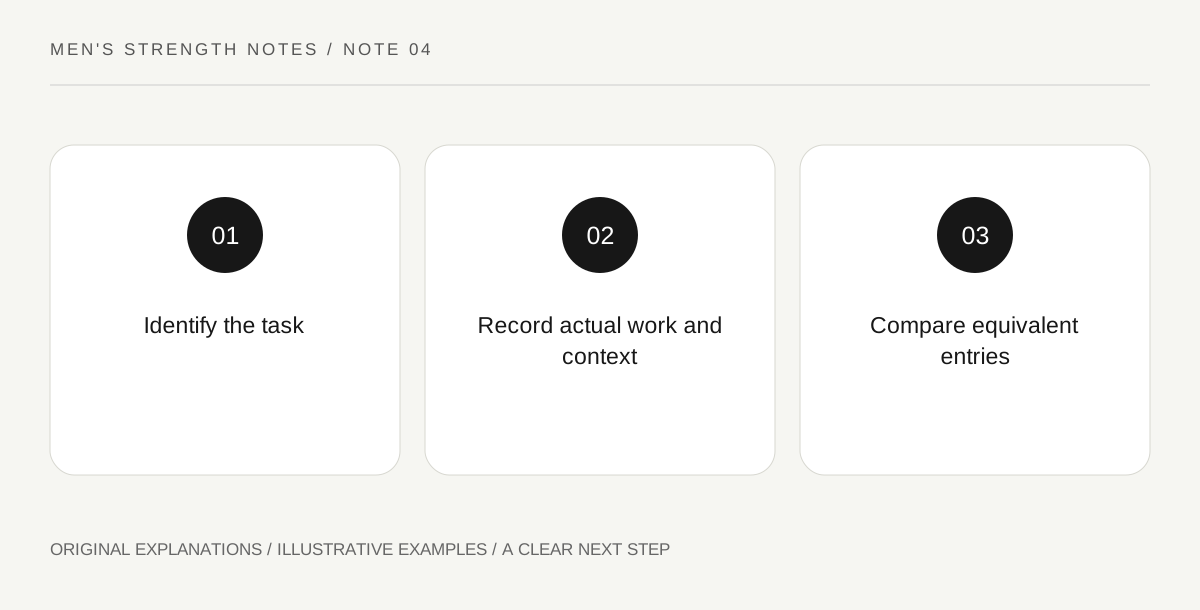
Original explanatory diagram. Read the full method and limitations below.
Define the exercise identity
Record the exercise variation in terms you and your instructor understand. Include the machine model or a clear equipment identifier when relevant. A supported row and an unsupported row should not quietly share one line because both involve pulling. The setup can change the task as much as the weight. NSCA describes meaningful differences across equipment types and fit. A log should preserve those differences rather than compress every exercise into a single generic name. You do not need a long technical essay; a consistent short label plus key settings can be enough.
Record completed work accurately
Keep planned sets and repetitions separate from completed work. Include the load unit and whether the entry is per hand or another defined quantity. If assistance was provided or a set ended early, note that without turning it into a failure label. The record is information for the next decision. Do not edit an earlier entry to make the pattern look smooth. An honest account of a shorter session can reveal a scheduling issue or a need for instruction. A visually perfect chart with ambiguous units is less useful than a plain note that accurately describes the attempt.
Add one meaningful context note
Choose details that could change interpretation: a different machine, a revised seat position, an instruction to limit a movement or a change in the order. Avoid recording every sensation as a separate metric. A short note such as new handle, instructor reviewed setup is actionable. A statement such as terrible workout is harder to use. If symptoms occurred, describe them factually and seek appropriate care rather than relying on the log to diagnose the cause. The goal is a manageable record, not constant self-surveillance or a requirement to score every minute of training.
Compare like with like before changing the plan
At review, ask whether the task and conditions are sufficiently similar for a comparison. A larger number on a different device is not automatically a strength gain. A smaller number with more controlled execution may reflect a changed task rather than decline. Discuss meaningful patterns with your instructor, especially when the plan includes specific progression rules. Keep personal information private if using an app or sharing screenshots. A log can support decisions and reveal questions, but it does not by itself establish that a program is effective, safe or appropriate for a health condition.
Use a record format that can survive a change of app. A plain entry with exercise identity, setup, units and completed work is easier to interpret later than a color score whose calculation you do not know. If the app automatically fills the last load, check it rather than accepting it as today's instruction. Export or back up information only if useful, and avoid sharing health notes publicly with a training screenshot. The record belongs to the decision, not to maintaining a flawless streak.
An illustrative log correction
Noah notices that his apparent jump in rowing load occurred after switching machines. He labels the two devices separately and records the new seat setting. At review he compares repeated sessions on the same setup instead of combining unlike entries. The correction makes the record more informative without erasing either session.
Practical checks
Optional checkboxes save only in this browser.
Questions that come up
Is the heaviest number always the best session?
No. Setup, execution, completed work and the plan's purpose matter. A number alone cannot describe the session.
Must I track every feeling?
No. Keep a small number of useful details that support decisions and professional conversations.
References and scope
These sources support the factual background. Examples and exercises are original illustrative teaching material. References do not imply endorsement.
- NSCA: Types of Resistance Training Equipment — Machine and free-weight differences, adjustment, fit and equipment demands.
- MedlinePlus: Exercise and Physical Fitness — Exercise types, gradual participation and seeking advice when safety is uncertain.