Do not use next-day soreness as your strength-session score
Muscle discomfort after unfamiliar activity can draw attention, but it is not a reliable report card for progress. A useful review looks at the task, the plan and daily function. Pain also has several possible causes, so a beginner should not label every symptom normal soreness or chase discomfort to prove effort.
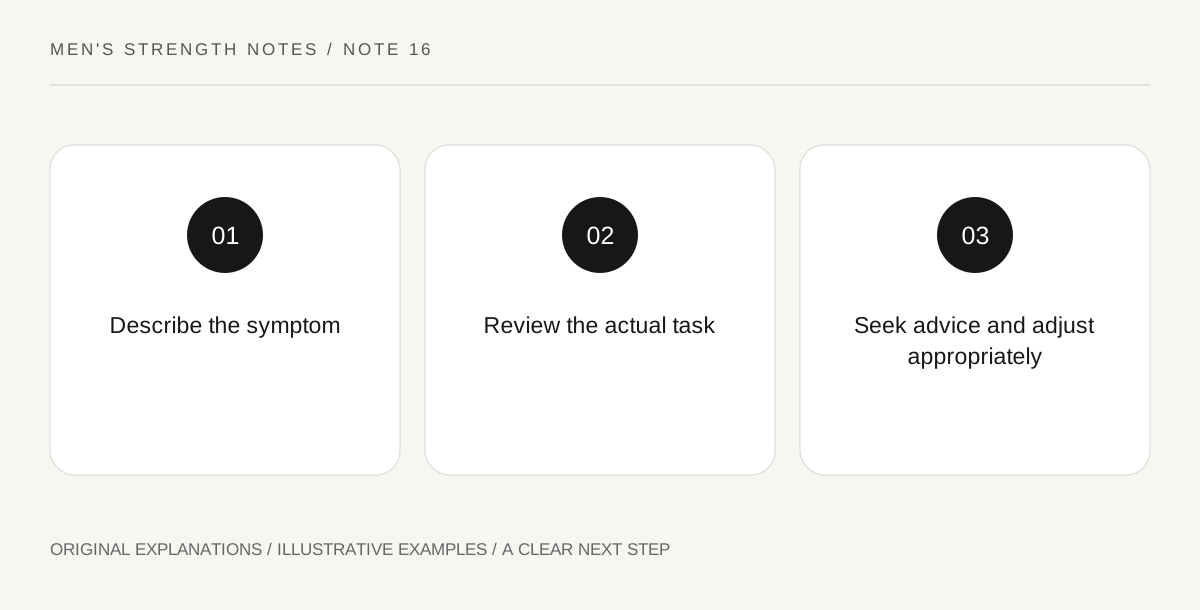
Original explanatory diagram. Read the full method and limitations below.
Describe the experience rather than naming it immediately
Note where discomfort occurs, when it began, what it feels like and how it affects ordinary movement. MedlinePlus explains that muscle aches can relate to overuse, injury and other causes. A general article cannot determine the cause from the fact that you trained yesterday. Keep sudden pain, swelling, weakness or other concerning changes visible and seek appropriate care when needed. Do not wait for an arbitrary soreness deadline if the symptom worries you. An accurate description is more useful to a professional than a confident claim that it is definitely a good workout ache.
Separate the session goal from the aftermath
The plan may aim to learn an exercise, complete consistent work or progress a specific task. None of those goals requires a predetermined amount of next-day discomfort. Lack of soreness does not prove the session was ineffective. Greater soreness after an unfamiliar exercise does not establish superior training. Review what you actually did and whether it matched the taught plan. Avoid adding an extra finisher solely because you expect to feel too comfortable tomorrow. A session's value should not depend on making stairs difficult or producing a story about how damaged you feel.
Bring functional disruption into the conversation
If discomfort interferes with work, sleep or ordinary tasks, tell the instructor and seek clinical advice as appropriate. Describe any recent change in exercise, load, volume or activity outside the gym. A demanding work shift and a new training task may both matter. Do not diagnose a recovery problem from one sensation or use supplements to conceal symptoms while repeating the same demand. Ask how the plan should be reviewed. A coach can discuss training decisions within their role, while a clinician evaluates medical concerns. Keep those roles clear rather than expecting a generic fitness plan to diagnose pain.
Return to a suitable plan instead of chasing or avoiding all sensation
Follow appropriate advice about subsequent activity and recovery. This article does not prescribe a treatment, a rest interval for an injury or a rule that all discomfort should be exercised away. Keep the log factual and compare repeatable tasks over time. If symptoms persist or change, contact an appropriate professional. A useful routine should support daily life, with room for learning and adjustment. It should not turn severe soreness into a badge of masculinity or make asking for help seem less committed. Progress can be quieter than the most dramatic after-workout story.
Do not use another person's recovery story as a diagnostic timetable. Two people may describe the same word, sore, while referring to different sensations, activities and health histories. Explain your own experience and its impact. A professional can decide which questions or assessment are appropriate. Keep the training record available, including new exercises and work outside the gym, rather than relying on a vague impression that the session was normal because everyone else seemed comfortable.
An illustrative session review
After a new exercise, Max notices discomfort that makes normal work tasks difficult. He records the location, timing and recent training change, then discusses the plan and seeks appropriate assessment. At later sessions he tracks the taught task rather than trying to reproduce the same level of soreness.
Practical checks
Optional checkboxes save only in this browser.
Questions that come up
Does no soreness mean no progress?
No. Soreness is not a complete measure of training benefit or progress.
Can I assume every ache after lifting is normal?
No. Pain has several possible causes. Seek appropriate assessment for concerning, persistent or unusual symptoms.
References and scope
These sources support the factual background. Examples and exercises are original illustrative teaching material. References do not imply endorsement.
- NIAMS: Sports Injuries — Injury symptoms, risk factors and the limits of self-assessment.
- MedlinePlus: Muscle Aches — Muscle pain has multiple causes and concerning symptoms require appropriate care.
- NIAMS: Sports Injuries, Diagnosis and Steps to Take — Professional assessment and individualized care for suspected injuries.