Learn the seat and starting position before selecting a machine load
A machine can guide a movement while still fitting different bodies differently. The seat, pads and starting position deserve attention before the number on the stack. A useful first session teaches how this particular machine works, how to exit it and when its design does not fit you comfortably.
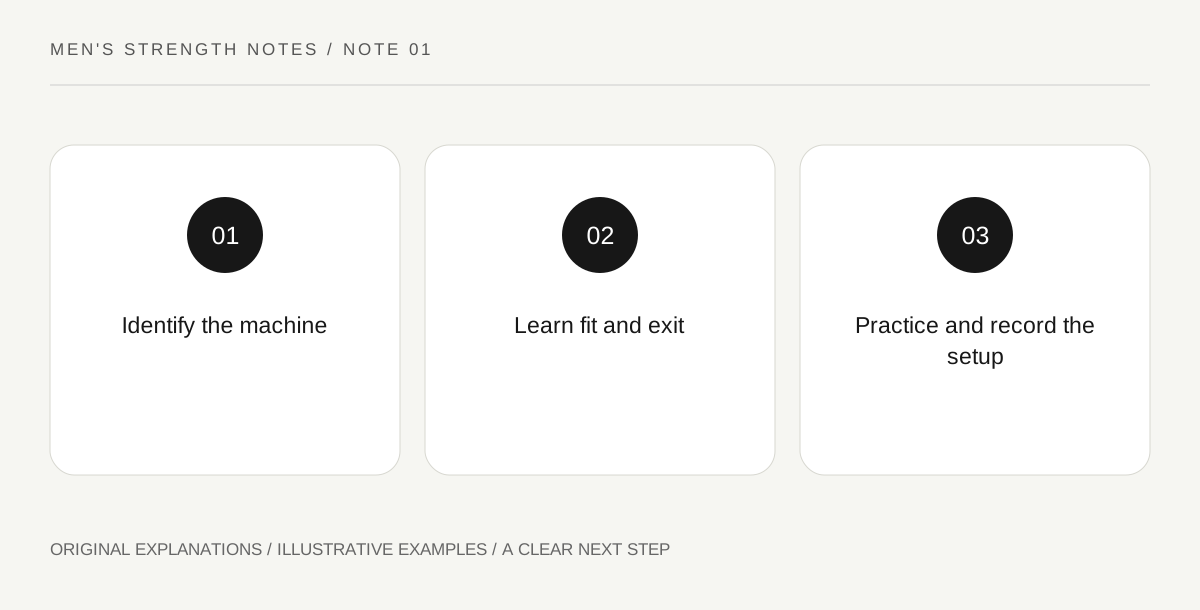
Original explanatory diagram. Read the full method and limitations below.
Identify the exact machine and task
Read the equipment label and ask a qualified instructor to demonstrate its intended use. Similar-looking machines can differ in adjustment, starting resistance and movement path. NSCA notes that equipment choice depends partly on body dimensions and movement proficiency. Do not assume a machine used by a person of similar height should share every setting. Find the manufacturer's instructions and gym guidance where available. The goal is not memorizing a universal seat number; it is understanding the relationship between the moving parts, support surfaces and the exercise you are being taught.
Check adjustment access as well as the final position. A pin may be easy to reach while standing but awkward once seated, and some settings must be changed before entry. Ask the instructor to show the sequence in order. If several users share the station, identify which controls you must recheck each time. The previous user's setting is simply a previous setting, not a default for you. A concise record can include the order of adjustments when that prevents confusion.
Ask what each adjustment changes
Have the instructor explain the seat, backrest, pad and range controls relevant to the machine. Adjust only when and how the equipment instructions permit, with the load secured appropriately. A lever under tension is not something to experiment with while seated in an awkward position. Ask which setting aligns the equipment for your body and what signs suggest a poor fit. If the design cannot accommodate you, an alternative is a legitimate choice. Extra cushions or improvised extensions should not be added because they appear to solve reach without considering stability and intended use.
Practice entry, movement and exit
Learn how to get into the starting position and finish safely before adding a demanding load. Ask the instructor to watch an appropriately light practice attempt and give one or two clear cues. Explain discomfort rather than trying to match the machine's diagram at any cost. A fixed path does not guarantee that every joint position suits every person. Learn what to do if a repetition cannot be completed; the exit procedure belongs to the exercise, not an optional detail to discover under fatigue. Stop when the setup or instructions remain unclear.
Record settings with enough context
Write the machine identity, adjustment values and the instructor's useful cues after the session. A note saying seat three is meaningless at another gym or on another model. If you return and the equipment has changed, ask again instead of forcing the old settings. Keep the record practical, with a photograph only when the venue permits it and other people are not captured without consent. The note supports repeatability but does not certify technique. Review fit as you learn, and seek clinical advice when pain or a health concern affects what movement is appropriate.
An illustrative first machine lesson
Evan asks an instructor to explain a chest-press machine before touching the stack. They identify the seat and starting-position controls, practice entry and exit, and check a light attempt. Evan records the model and settings afterward. At another gym he asks for a new demonstration rather than assuming the same seat number applies.
Practical checks
Optional checkboxes save only in this browser.
Questions that come up
Does a machine eliminate technique needs?
No. Setup, fit, movement and finishing still matter. Ask for instruction on the actual model.
Can I copy another person's seat number?
Use it only as a question, not a fitting rule. Body dimensions and equipment design differ.
References and scope
These sources support the factual background. Examples and exercises are original illustrative teaching material. References do not imply endorsement.
- NSCA: Types of Resistance Training Equipment — Machine and free-weight differences, adjustment, fit and equipment demands.