A spotter agreement begins before the weight moves
A person standing nearby is not automatically a prepared spotter. Some exercises and equipment arrangements need specific assistance or safety systems, and the details must be learned. A useful conversation happens before loading, with clear roles and a stopping plan, rather than after a repetition has already become uncertain.
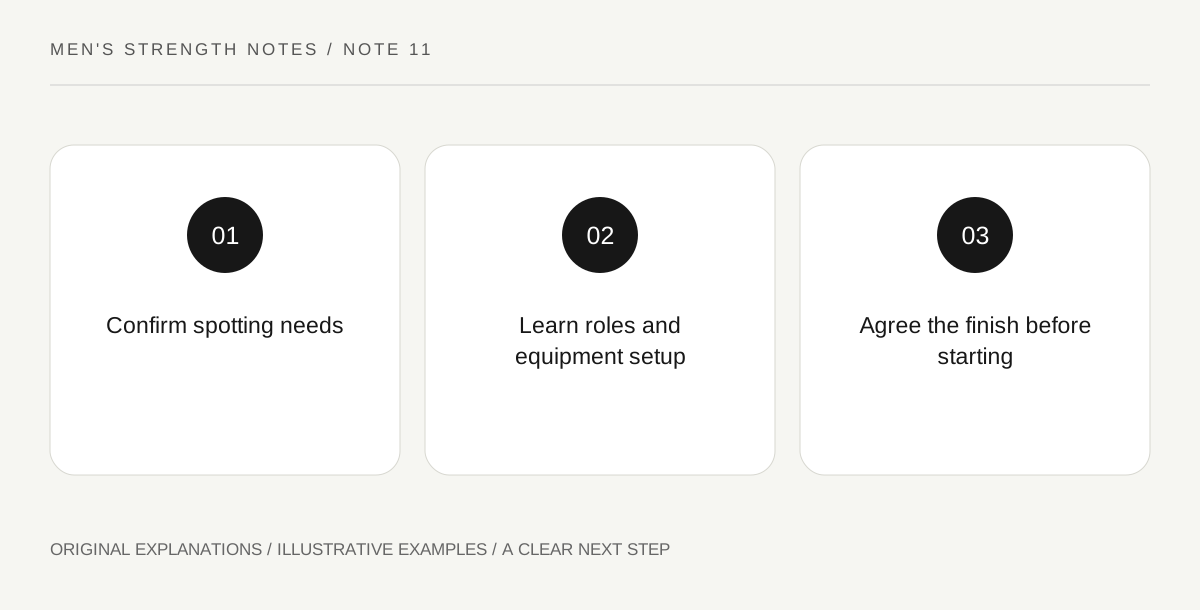
Original explanatory diagram. Read the full method and limitations below.
Ask whether this task needs spotting
Have a qualified instructor explain the requirements of the exact exercise and equipment. Do not assume that every barbell movement uses the same spotting method or that a rack removes every need for instruction. NSCA distinguishes equipment demands and notes that free weights require appropriate coordination and technique. A general article cannot teach every spotting procedure safely. If you do not understand how the exercise will finish or what happens when a repetition cannot be completed, do not begin a demanding attempt. Choose a suitable learning arrangement instead of relying on someone to improvise a rescue.
Identify who is responsible for what
The lifter and helper need to understand the starting procedure, expected work, assistance cues and finish. Learn those roles from a qualified person for the actual task. A friend who is enthusiastic may still be unfamiliar with the method. Do not assume physical size alone establishes spotting competence. Ask whether the helper can explain the procedure and whether the arrangement is appropriate for the load and equipment. If the gym has rules about spotting or safety systems, follow them. A vague promise to help if needed is not the same as a shared understanding of when and how help occurs.
Check the equipment arrangement before loading
Use the manufacturer's instructions and qualified guidance for rack settings, catches or other safety features. Do not bypass a mechanism because it slows the setup or because another person appears to lift without it. Keep the surrounding area clear and avoid moving through another lifter's working space. Inspect any issue through the venue's process rather than attempting repairs. The safety setup is part of the exercise, not an accessory to add after a failed attempt. If a feature is missing, damaged or unclear, report it and choose another suitable task until the issue is resolved.
Agree on communication that can actually be heard in the venue. Background music, headphones and distance can interfere with a verbal cue. Resolve that before the attempt rather than assuming a shout will cut through the room. The exact spotting method still requires qualified instruction; better communication does not replace it. If either person is uncertain about the plan, stop the setup and clarify. A safe agreement includes the option to decline the attempt.
Keep the agreement within the session plan
Do not turn a request for assistance into permission for unplanned forced repetitions or a maximum test. Follow the intended work and stop rule. If the helper changes or the equipment differs, repeat the relevant discussion. Respect a person's decision not to spot when they are not prepared or able. A useful training environment allows questions and a different exercise without ridicule. Record any meaningful change to the session and discuss it with your instructor. The goal is a clearly understood arrangement that supports an appropriate task, not proving trust through an avoidable high-stakes attempt.
An illustrative spotting question
Ravi wants to learn a barbell exercise and asks a trainer about the exact spotting and rack requirements. They practice the procedure in an appropriate teaching setup before any demanding work. When his usual helper is absent later, Ravi chooses the agreed alternative rather than asking an unprepared stranger after loading.
Practical checks
Optional checkboxes save only in this browser.
Questions that come up
Can any strong friend spot?
Strength alone does not establish knowledge of the procedure. Use someone appropriately prepared for the actual exercise.
Does having a rack make instruction unnecessary?
No. Safety features need correct setup and use, and the whole exercise still requires appropriate technique and planning.
References and scope
These sources support the factual background. Examples and exercises are original illustrative teaching material. References do not imply endorsement.
- NSCA: Types of Resistance Training Equipment — Machine and free-weight differences, adjustment, fit and equipment demands.
- NIAMS: Sports Injuries — Injury symptoms, risk factors and the limits of self-assessment.