Choose an initial working load through coached practice, not comparison
The first useful load is one you can use for the intended exercise with appropriate control and instruction. It is not determined by another man's size, the color of a dumbbell or the machine someone left behind. A clear selection process gives you a repeatable starting point without requiring a maximum-effort test.
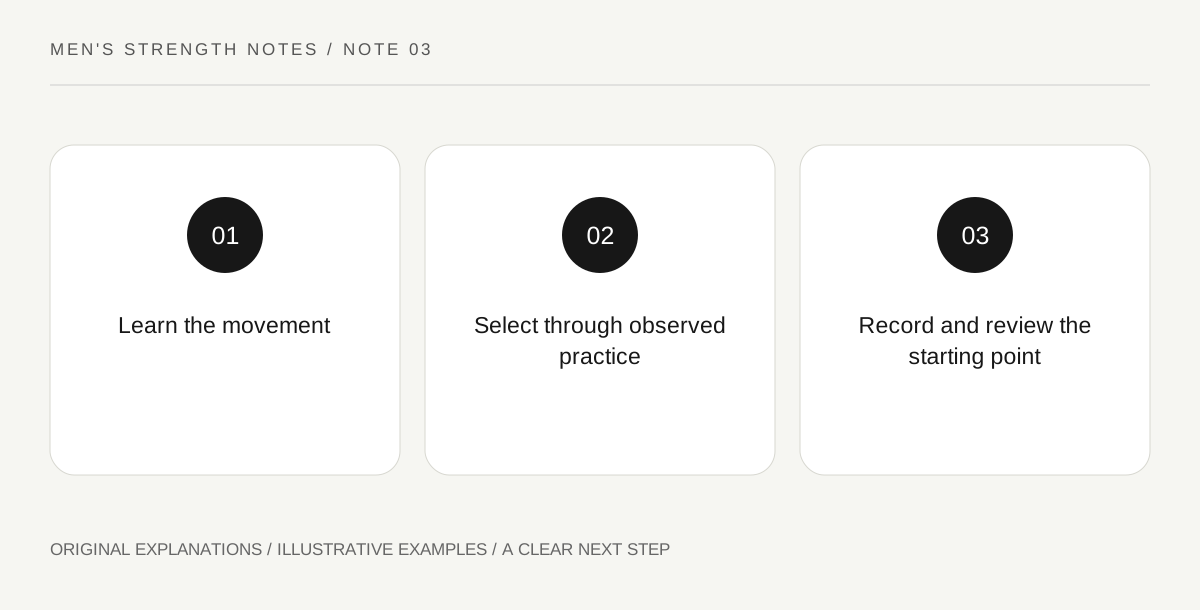
Original explanatory diagram. Read the full method and limitations below.
Begin with the exact movement being learned
Confirm the exercise variation, setup and intended work with a qualified instructor. A familiar exercise name can cover several versions with different demands. Learn the movement and the safe finishing procedure before selecting a challenging load. MedlinePlus describes resistance exercise as one of several activity forms and encourages appropriate advice when safety is uncertain. Do not use a heavy first attempt to discover whether you understand the path. A practice load or another appropriate teaching method can reveal setup questions while there is still attention available to answer them.
Ask what a suitable effort should look like
Have the instructor explain the intended effort and what should remain consistent across repetitions. Ask which changes mean the load or task needs adjusting, such as losing the taught position or needing uncontrolled momentum. This is different from being told merely to try harder. An effort description should fit the plan and the person. ACSM's current guidance emphasizes individualization and does not make training to failure a universal requirement. Do not conduct a personal maximum test simply because a chart expresses loads as a percentage of a maximum; ask how the plan can be applied appropriately.
Keep the comparison local to your own attempt
Use the observed practice and instructor feedback rather than the next person's weight. Equipment labels do not make two exercises equivalent, and different machines can feel different at the same displayed number. If you change equipment, treat the load as a new selection question. Avoid raising it because an audience arrives or lowering it only to protect an imagined reputation. A beginner's task is gathering useful information. Explain if a movement is painful, confusing or unstable. Those observations are reasons to stop and clarify, not proof that you need a more forceful attempt.
Ask how equipment increments affect the next decision. The smallest available change may be larger on one machine than another, and an adjustable dumbbell may offer different steps from a fixed rack. That does not require forcing the next number immediately. An instructor can explain how the plan handles the available choices. Keep the increment question separate from the starting-load question: first establish an appropriate task, then discuss how future changes will be made when the agreed review rule is met.
Record the starting point and the review rule
Write the exercise, equipment, settings, load unit and the instructor's guidance for the next session. Ask when a change should be considered and which variable should change first. Keep the initial number provisional; learning can make a movement feel different without requiring a dramatic load increase. If the task no longer fits or a symptom develops, seek appropriate advice. The successful first session leaves you able to explain what you did and why. It need not produce soreness, a personal record or a photograph of an impressive stack to count as worthwhile training.
An illustrative starting load
Owen learns a supported rowing exercise with an instructor. They use an appropriate practice approach, check position and choose a manageable starting load for the planned work. Owen records the setup and review rule. He does not change the number after noticing that a smaller person nearby is lifting more.
Practical checks
Optional checkboxes save only in this browser.
Questions that come up
Must I test my maximum to begin?
Do not assume so. Ask a qualified instructor for an appropriate way to establish a starting load within your plan.
Can I transfer a load directly between machines?
No. Different equipment and movement paths can change the task. Reassess the load and setup.
References and scope
These sources support the factual background. Examples and exercises are original illustrative teaching material. References do not imply endorsement.
- ACSM: Updated 2026 Resistance Training Guidelines — Individualized training, consistency, equipment options and limits of advanced techniques for healthy adults.
- NSCA: Types of Resistance Training Equipment — Machine and free-weight differences, adjustment, fit and equipment demands.
- MedlinePlus: Exercise and Physical Fitness — Exercise types, gradual participation and seeking advice when safety is uncertain.