Learn controlled repetition timing before copying a dramatic slow-motion lift
A repetition has a lifting phase, a return and transitions between them. Changing their timing changes the task. A useful beginner lesson makes those phases understandable and controlled, rather than copying a slow-motion clip or moving as fast as possible to finish a target number.
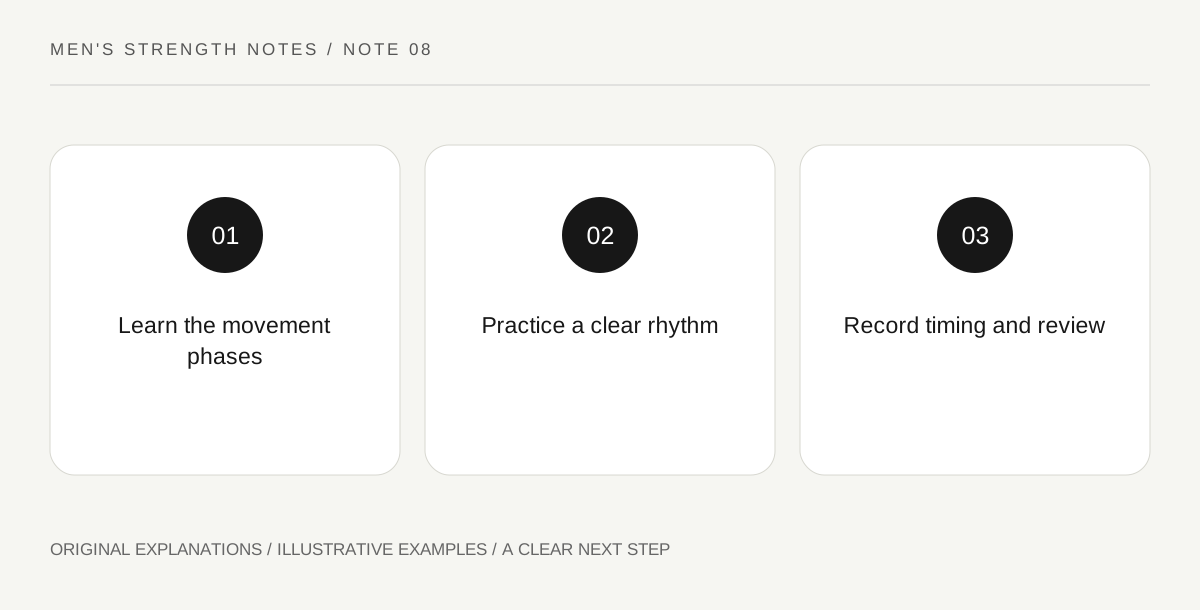
Original explanatory diagram. Read the full method and limitations below.
Identify the phases of your exercise
Ask the instructor to show where the movement begins, where it changes direction and where it finishes. In some exercises the weight moves upward during the effort; in others the direction is less intuitive. Use the actual equipment and variation rather than memorizing a universal lifting-versus-lowering slogan. A short demonstration at an appropriate teaching load can clarify the path. Keep the setup and exit part of the lesson. A repetition is not complete merely because the weight reached one end; the return must also follow the intended method and equipment instructions.
Use timing as a cue, not a performance effect
A simple count can help you avoid rushing, but it should be explained in the plan. Different tempo codes use different conventions, so ask what each number means before following one. Do not assume slower always means safer or more effective. Very slow work can still be demanding, and speed-focused training has its own purpose and instruction needs. ACSM's current guidance supports tailoring variables to goals rather than treating complexity as universally necessary. A beginner can focus on a clearly taught controlled rhythm without needing an elaborate timing scheme for every exercise.
Notice when momentum replaces the taught action
If the movement becomes a swing, bounce or abrupt drop contrary to instruction, stop and ask whether the load or task needs adjustment. This is not a diagnosis based on appearance; it is a way to identify when you are no longer doing what was taught. Ask the instructor for one observable cue rather than collecting ten internal instructions at once. A mirror or permitted video may assist feedback, but it cannot replace a knowledgeable observation or reveal every issue. Avoid filming others or using a camera angle that distracts you from safely handling equipment.
Keep timing consistent enough to interpret the log
If you change the tempo, record it. The same weight and repetition count can represent a different task when the timing changes substantially. Do not compare a hurried earlier attempt with a slower coached version and call the lower number a loss of strength. Ask how the new instruction fits the progression plan. Keep breathing and comfort in view, and seek appropriate advice for symptoms. A useful rhythm is one you understand and can repeat within the plan. It need not look theatrical or match the editing speed of an online demonstration.
Listen to the equipment as well as the count when the instructor asks you to. An abrupt impact or stack crash may reveal a rushed return on some machines, while quietness alone does not prove good technique. Treat such cues as observations to discuss, not universal diagnostic rules. Ask which signs matter on the actual device. A repeatable lesson uses a few relevant cues that connect to the mechanism rather than collecting dramatic rules from unrelated exercises.
An illustrative timing lesson
Luis realizes that he lowers a machine handle abruptly after each effort. An instructor demonstrates the intended return and uses a simple verbal rhythm during a suitable practice set. Luis records the revised instruction and does not compare the new controlled set directly with his earlier hurried repetitions.
Practical checks
Optional checkboxes save only in this browser.
Questions that come up
Is the slowest possible repetition always best?
No. Timing should fit the exercise, goal and instruction. Slower is not automatically safer or more effective.
Can the same weight feel harder after a timing change?
Yes. The task has changed. Keep timing in the record and discuss progression using comparable execution.
References and scope
These sources support the factual background. Examples and exercises are original illustrative teaching material. References do not imply endorsement.
- ACSM: Updated 2026 Resistance Training Guidelines — Individualized training, consistency, equipment options and limits of advanced techniques for healthy adults.
- MedlinePlus: Exercise and Physical Fitness — Exercise types, gradual participation and seeking advice when safety is uncertain.