Use rest to prepare the next set instead of treating every pause as wasted time
Rest between sets is part of a strength session, not evidence that you are doing nothing. Its useful length depends on the task and plan. A beginner benefits from understanding what the pause is for and how to be ready again, without turning a universal stopwatch rule into a test of toughness.
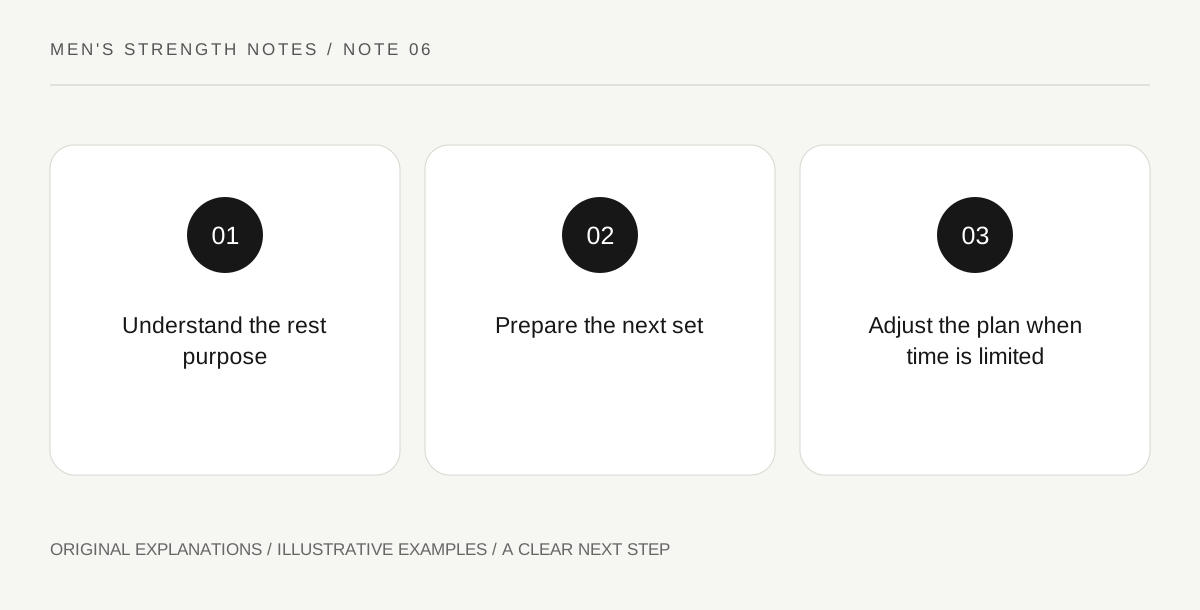
Original explanatory diagram. Read the full method and limitations below.
Ask what the pause is intended to support
A session may use different rest arrangements for learning, heavier work or a particular training goal. Ask your instructor to explain the purpose in the actual plan. ACSM emphasizes individualization rather than a single rigid prescription for every healthy adult. Do not copy the shortest rest period from a circuit video and assume it suits an unfamiliar loaded exercise. A pause can also provide time to check the next setup and ask a question. The relevant issue is readiness for the next task, not whether the session looks continuously busy to someone watching.
Keep rest distinct from distraction
A pause that turns into an unplanned long phone session can change the workout's timing, while rushing because a timer beeps can also be unhelpful. Use a simple timer if the plan calls for one and keep notifications manageable. Store the phone where it does not obstruct equipment or encourage unsafe handling while moving weights. If you need the device for accessibility or instructions, account for that purpose rather than imposing a blanket ban. The goal is a deliberate pause. Record a meaningful timing change if it affects how a session should be interpreted.
If sharing equipment, agree how the pause and setup will work before taking turns. A partner may need a different seat position or load, and restoring those settings takes time. Do not let the wish to be polite turn the next set into a rushed attempt with someone else's arrangement. A shared station can be practical when both people understand the process, but it is reasonable to use another taught option when repeated adjustments make the session confusing.
Prepare for the next set calmly
Use the interval to confirm the equipment, position and intended work. Do not adjust a loaded device in a way contrary to its instructions or start a different unfamiliar exercise just to fill the gap. If breathing, symptoms or another concern makes readiness uncertain, stop and seek appropriate advice. A general article cannot determine a safe return point from a clock reading. Tell the instructor what you notice. An interval plan should make it possible to ask for more explanation without being shamed for resting longer than someone else's routine.
Solve time pressure through the plan
If the session repeatedly runs longer than available, discuss its structure rather than cutting every pause automatically. The appropriate solution might involve fewer exercises, a different organization or another suitable adjustment. Do not compress a planned strength session into a frantic circuit without understanding what changes. Keep shared-equipment etiquette clear: ask before working in and follow venue rules while preserving your own setup and safety. A shorter well-understood session can be more useful than completing a long list through rushed transitions. The pause belongs to the training decision, just as much as the repetitions do.
An illustrative short lunch break
Marcus has limited gym time and begins skipping rests to finish his card. He tells his instructor, who reviews the session structure and explains the intended pauses. They choose a suitable shorter arrangement instead of treating every exercise as a timed race. Marcus keeps the changed plan distinct in his log.
Practical checks
Optional checkboxes save only in this browser.
Questions that come up
Is shorter rest always better?
No. Rest should fit the task and goal. A shorter interval changes the session and is not automatically progress.
Should I start when the timer rings despite feeling unwell?
No. A timer is not medical clearance. Stop for concerning symptoms and seek appropriate advice.
References and scope
These sources support the factual background. Examples and exercises are original illustrative teaching material. References do not imply endorsement.
- ACSM: Updated 2026 Resistance Training Guidelines — Individualized training, consistency, equipment options and limits of advanced techniques for healthy adults.
- MedlinePlus: Exercise and Physical Fitness — Exercise types, gradual participation and seeking advice when safety is uncertain.