Equipment decisions3 min read
A machine can guide a movement while still fitting different bodies differently. The seat, pads and starting position deserve attention before the number on the stack. A useful first session teaches how this particular machine works, how to exit it and when its design does not fit you comfortably.
Read the guide ↗
Training decisions3 min read
An exercise card can look precise while leaving important terms unexplained. Sets, repetitions, load, rest and tempo describe different parts of a task. Learning the notation lets you ask better questions and follow a suitable plan, without assuming that a printed number is automatically appropriate for your body or experience.
Read the guide ↗
Learning technique3 min read
The first useful load is one you can use for the intended exercise with appropriate control and instruction. It is not determined by another man's size, the color of a dumbbell or the machine someone left behind. A clear selection process gives you a repeatable starting point without requiring a maximum-effort test.
Read the guide ↗
Progress and recovery3 min read
A load entry without equipment, variation or settings can create a false impression of progress. A strength log becomes more useful when it explains the task actually performed. Keep it short enough to use and detailed enough to distinguish a genuine comparison from a different machine, range or assistance arrangement.
Read the guide ↗
Training decisions3 min read
More weight, more repetitions, shorter rest and a harder exercise can all change a session. Changing them together makes it difficult to know what happened. A clear progression discussion identifies the goal, the review rule and one manageable change, rather than requiring a larger number every time you enter the gym.
Read the guide ↗
Training decisions3 min read
Rest between sets is part of a strength session, not evidence that you are doing nothing. Its useful length depends on the task and plan. A beginner benefits from understanding what the pause is for and how to be ready again, without turning a universal stopwatch rule into a test of toughness.
Read the guide ↗
Training decisions3 min read
Online clips often show the final difficult repetition, which can make stopping earlier look like incomplete work. That is a poor starting assumption for a beginner. Learn the plan's intended effort and finishing rule before chasing failure, and distinguish a challenging exercise from a situation where technique or safety has become uncertain.
Read the guide ↗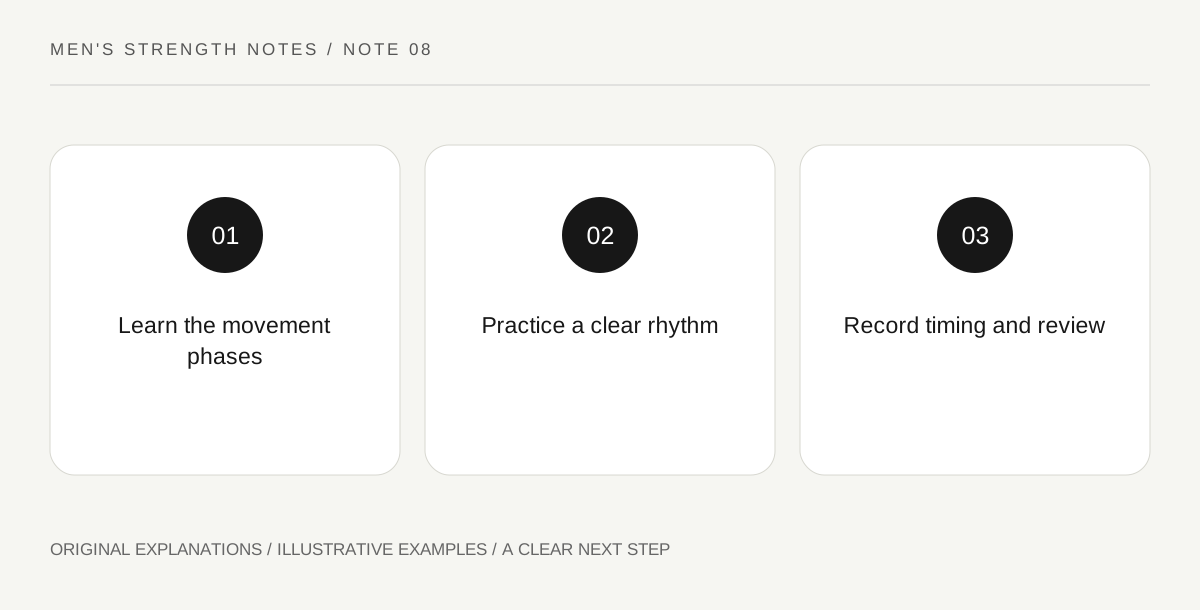
Learning technique3 min read
A repetition has a lifting phase, a return and transitions between them. Changing their timing changes the task. A useful beginner lesson makes those phases understandable and controlled, rather than copying a slow-motion clip or moving as fast as possible to finish a target number.
Read the guide ↗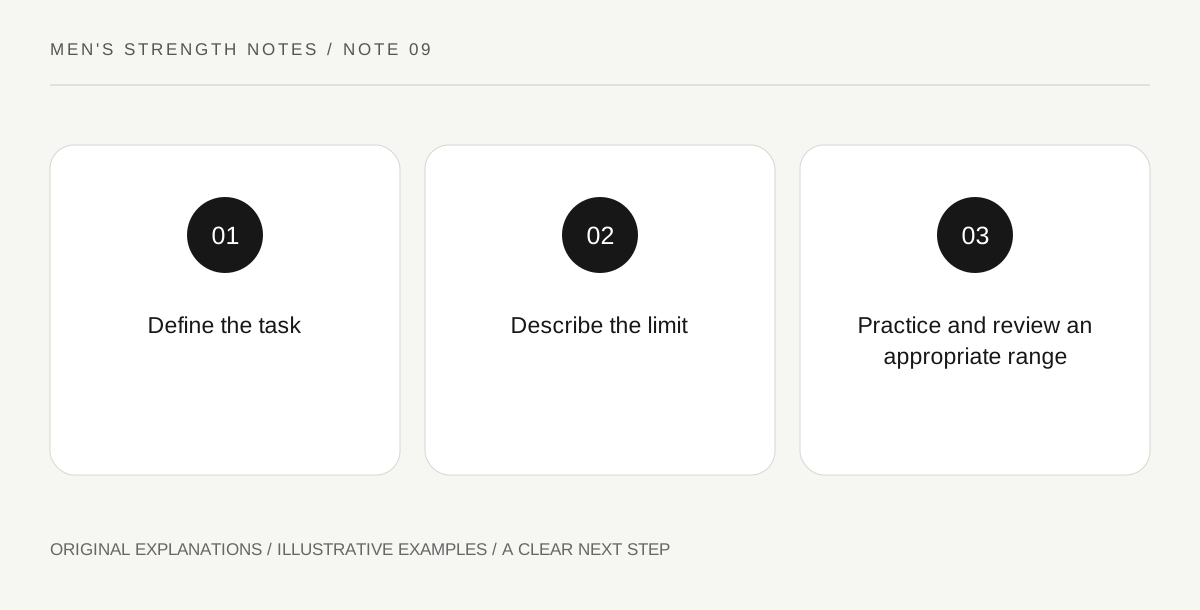
Learning technique3 min read
An exercise's range is not determined by how far a flexible person moves in a video. Equipment, body proportions, skill and health can affect the appropriate task. A beginner needs a clear demonstration and a way to discuss discomfort, without forcing a position to match a diagram or adopting a permanently shortened movement on guesswork.
Read the guide ↗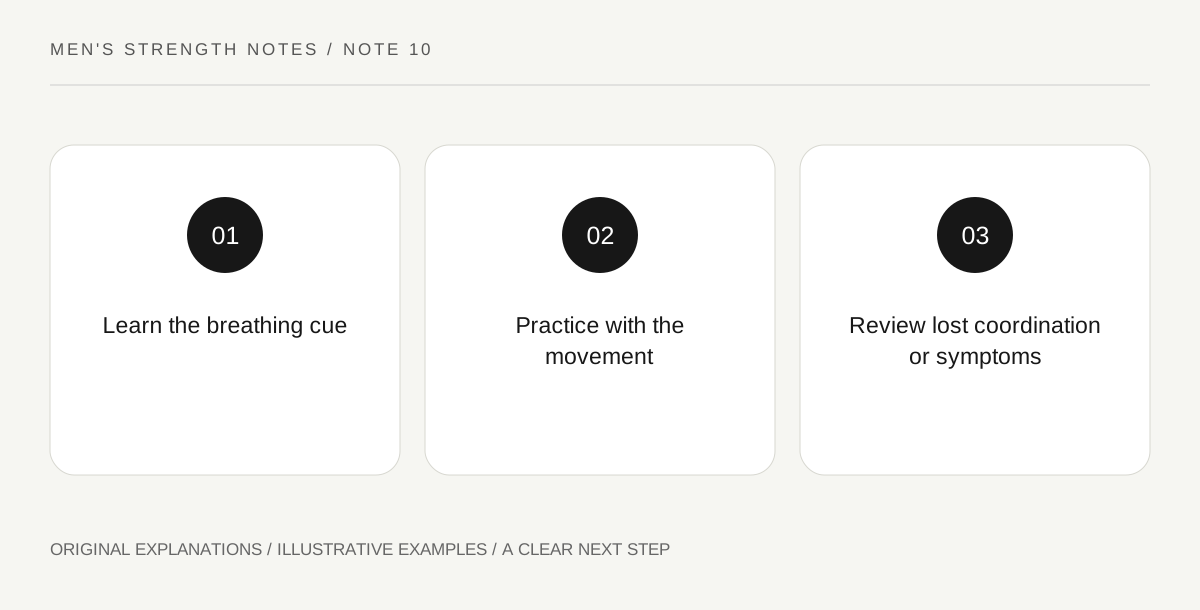
Learning technique3 min read
Beginners can concentrate so hard on a movement that they stop breathing without noticing. Breathing deserves an explicit place in the lesson. General public-health advice encourages breathing through strength work; specialized lifting techniques should not be copied from heavy-lift clips without qualified instruction and attention to personal health.
Read the guide ↗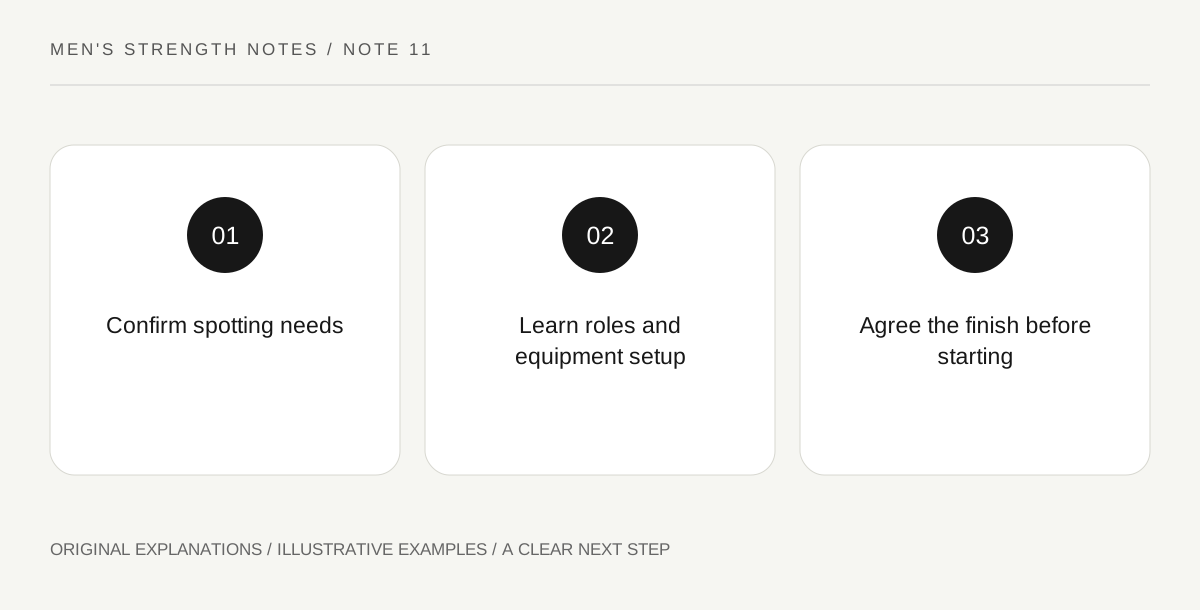
Equipment decisions3 min read
A person standing nearby is not automatically a prepared spotter. Some exercises and equipment arrangements need specific assistance or safety systems, and the details must be learned. A useful conversation happens before loading, with clear roles and a stopping plan, rather than after a repetition has already become uncertain.
Read the guide ↗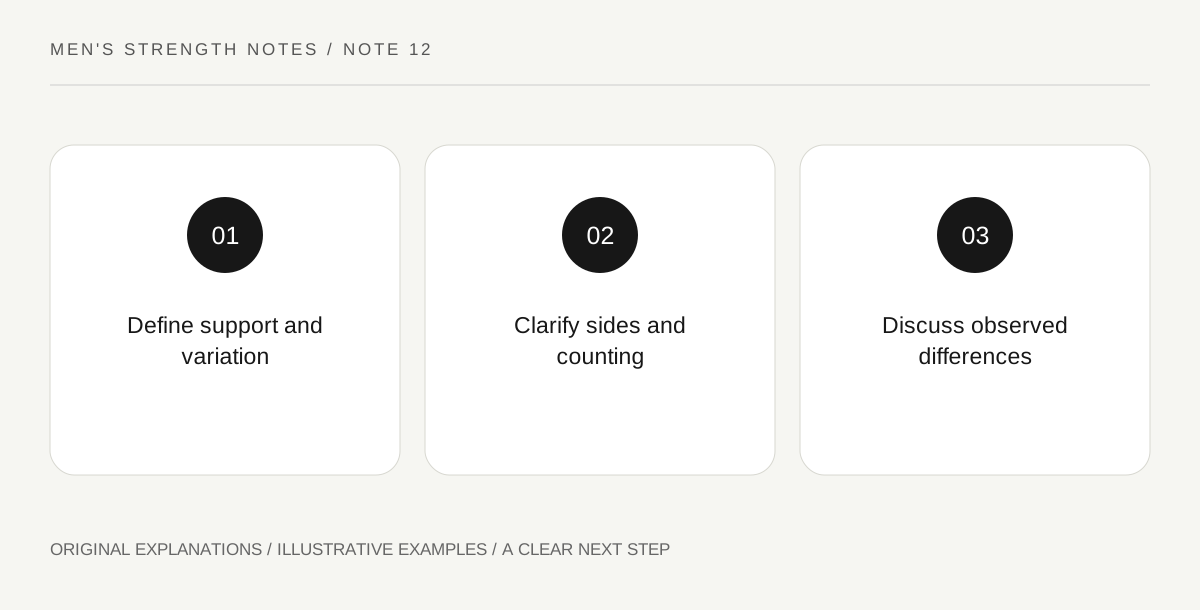
Learning technique3 min read
Training one side at a time can change balance, setup and how repetitions are counted. It is not simply half of a two-sided exercise. A useful lesson clarifies support, side order and the intended movement, while avoiding self-diagnosis of an imbalance from one unfamiliar attempt.
Read the guide ↗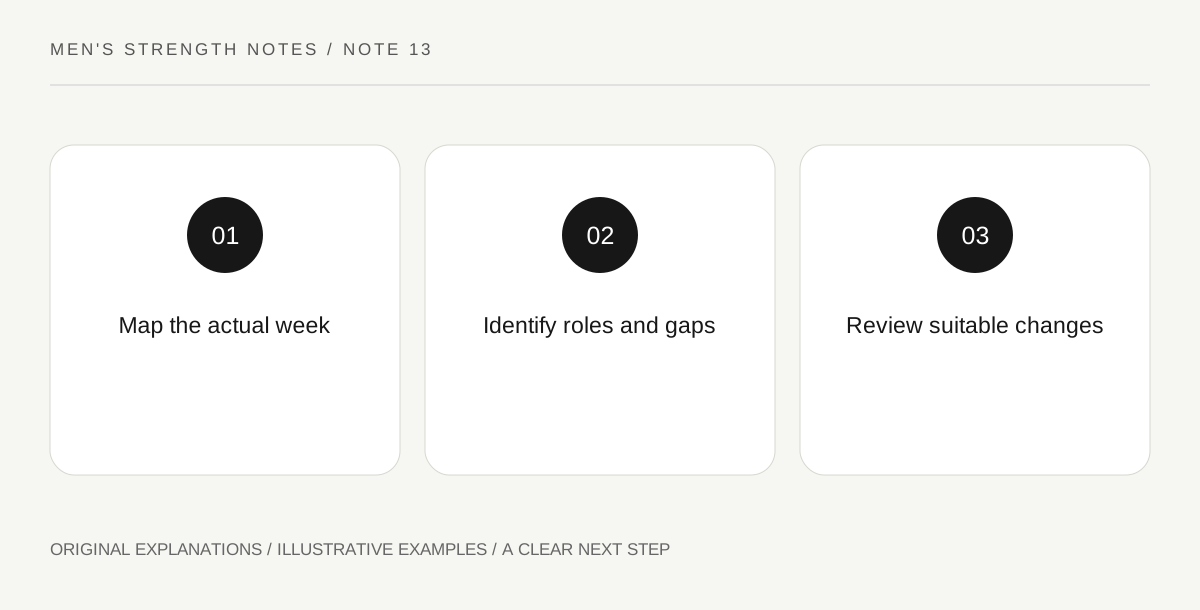
Training decisions3 min read
A beginner can learn several familiar upper-body exercises while leaving other major muscle groups out of the plan. A coverage review makes the pattern visible. It does not require an exact internet ratio, a different exercise for every small muscle or a personalized program created from a generic checklist.
Read the guide ↗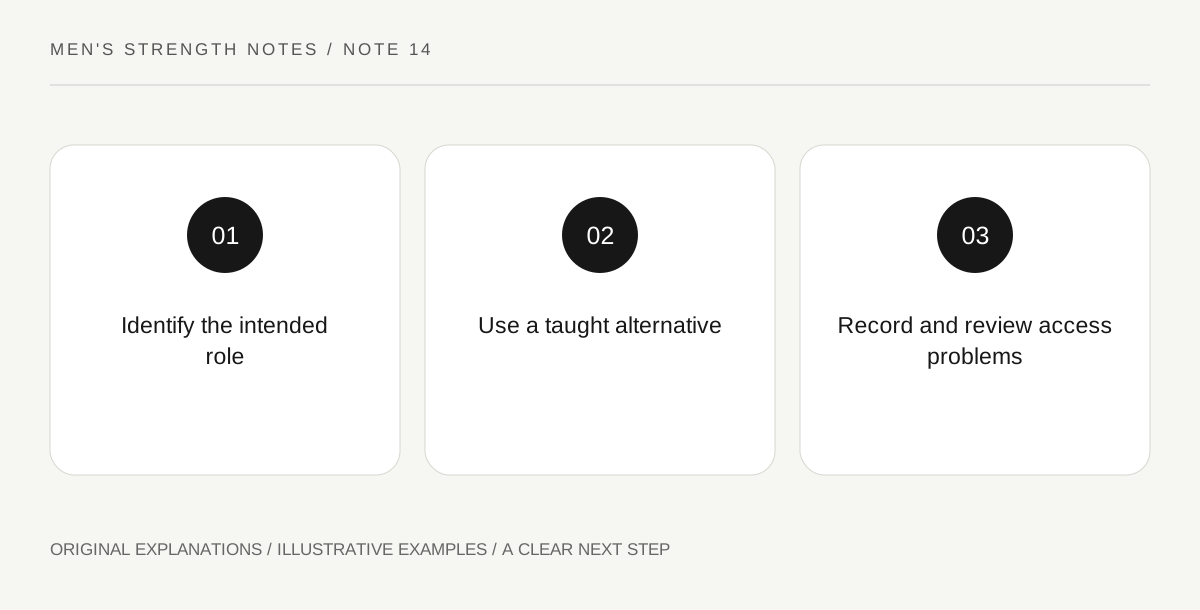
Equipment decisions3 min read
A crowded gym can turn a clear plan into a series of guesses. The nearest free machine is not automatically an equivalent exercise. A useful substitution preserves the intended role while accounting for skill, setup and load, and it is best agreed before the queue appears.
Read the guide ↗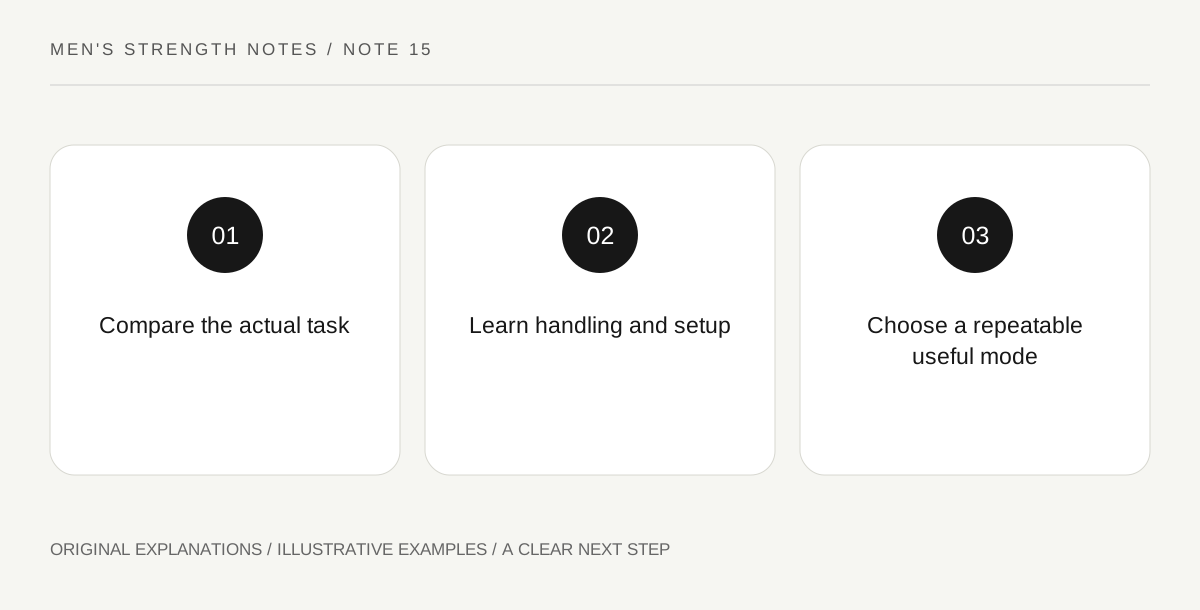
Equipment decisions3 min read
Machines and free weights are often presented as rival identities. A beginner needs a more practical comparison: fit, support, learning demands, access and purpose. Neither category automatically proves seriousness or guarantees safety, and a useful program can use one or several equipment types without requiring a symbolic graduation.
Read the guide ↗
Progress and recovery3 min read
Muscle discomfort after unfamiliar activity can draw attention, but it is not a reliable report card for progress. A useful review looks at the task, the plan and daily function. Pain also has several possible causes, so a beginner should not label every symptom normal soreness or chase discomfort to prove effort.
Read the guide ↗
Training decisions3 min read
An exercise using body weight can be demanding even when no external load is visible. Leverage, support, movement range and repetition structure can all change the task. A useful beginner plan treats those variables deliberately rather than assuming bodyweight means easy, universally safe or impossible to progress.
Read the guide ↗
Progress and recovery3 min read
A supplement shelf can make ordinary strength training seem incomplete without several powders. A better first question is what the product claims, what evidence supports that claim and whether it fits your health and medicines. No supplement substitutes for learning an appropriate program, and a label is not a personalized prescription.
Read the guide ↗
Learning technique3 min read
A demonstration can feel clear until the instructor steps away. A short teach-back shows whether you understand the setup, movement, finish and reason for the exercise. It also helps you evaluate the teaching relationship, without treating confidence, physique or social-media popularity as evidence of relevant qualifications.
Read the guide ↗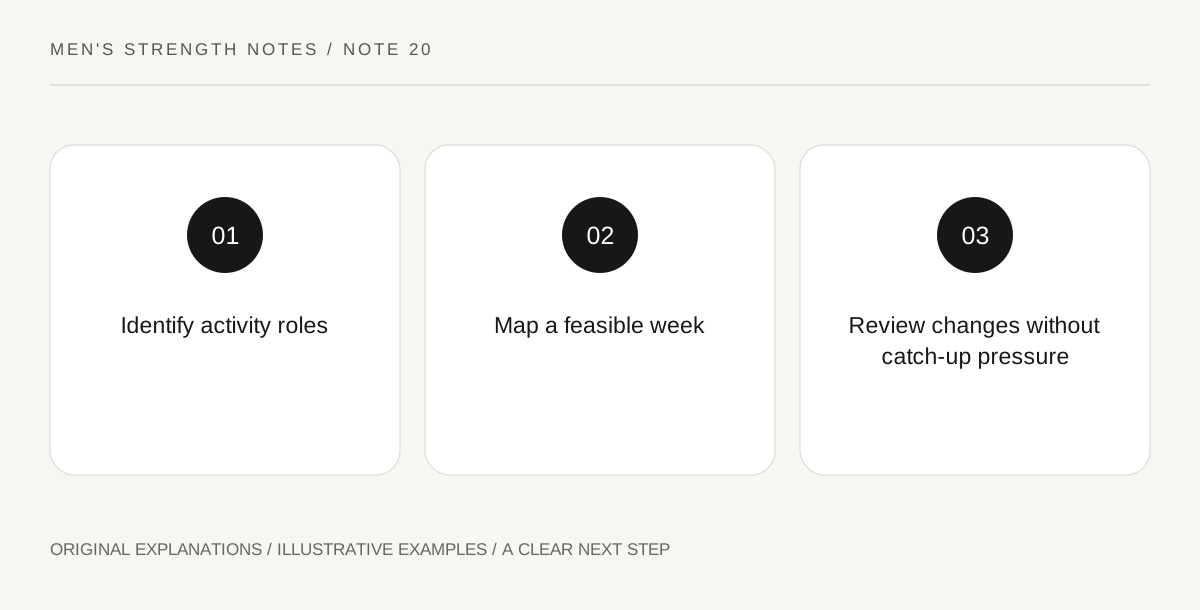
Training decisions3 min read
A strength session and an aerobic session can both be demanding while serving different roles. Treating gym fatigue as proof that every activity need is covered can obscure the week's pattern. A useful review identifies what each session contains and builds a feasible arrangement without prescribing one universal order or schedule.
Read the guide ↗